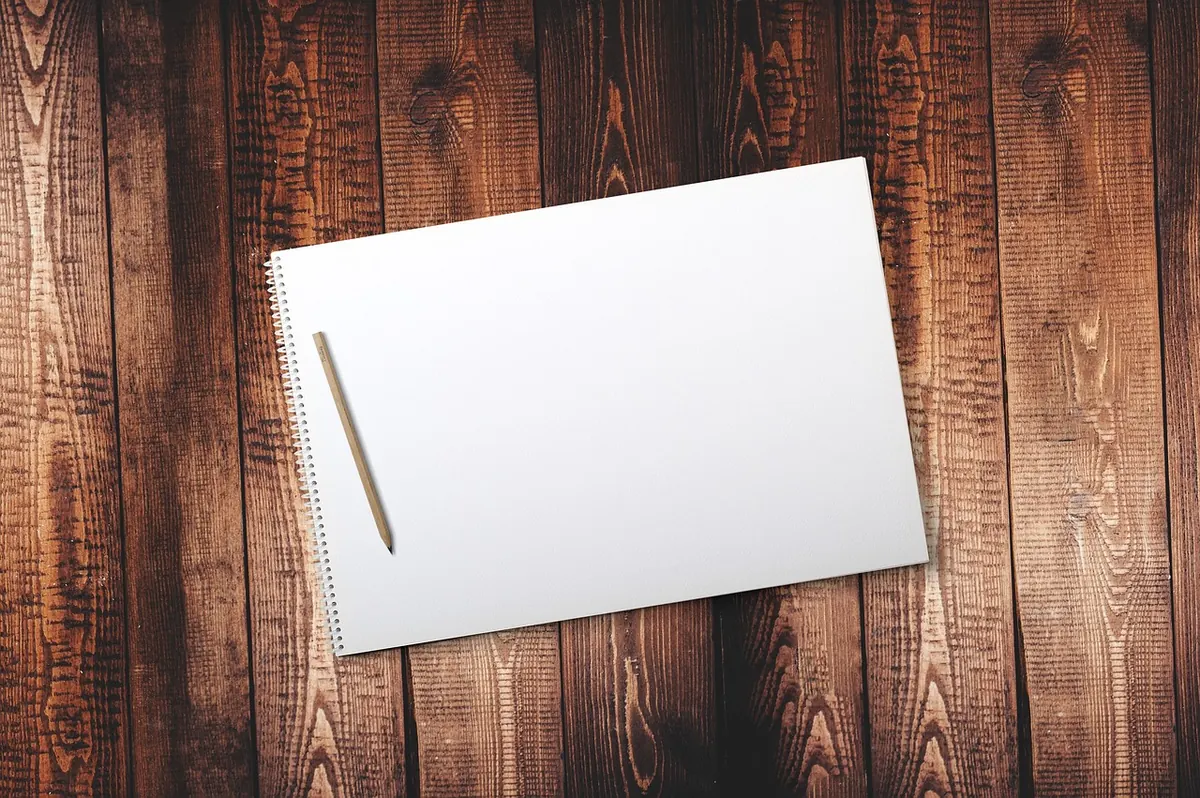
A Beginner's Guide to Choosing Your First Sketchbook
Walk into any art shop and you will meet a wall of sketchbooks. Soft covers, hard covers, spiral spines, cream pages, bright white pages, some the size of a postcard and others the size of a tea tray. Every one of them looks promising, and every one of them costs money you would rather spend on pencils.
The good news is that choosing a first sketchbook is not complicated once you know what the four key details mean. Paper weight, paper texture, binding and size decide almost everything about how a sketchbook feels to use. Get those roughly right and you will draw more often, because the book will not fight you.
Start with what you actually draw
Before you look at a single cover, be honest about your materials. A sketchbook that is perfect for graphite can be a miserable experience with wet media, and the other way round.
Think about the last few things you drew. Were they pencil studies, ink line drawings, coloured pencil, charcoal, watercolour washes, or a mix of everything? If you are like most beginners, the answer is "a bit of all of it", which is exactly why paper weight matters so much.
Paper weight: the number that matters most
Paper weight is measured in grams per square metre, usually written as gsm. It tells you how much a single square metre of that paper weighs, which in practice means how thick and sturdy the sheet is. Anything from about 90 gsm upwards counts as drawing paper, though the useful range for sketchbooks starts a little higher.
Here is a rough guide, based on how the paper behaves rather than any brand:
- Around 90–110 gsm: Thin and affordable. Fine for graphite, coloured pencil and light ink work, as long as you are not too heavy-handed. Wet media will buckle it and may bleed through to the next page.
- Around 120–160 gsm: The comfortable middle ground for most beginners. It takes pencil and ink well, copes with light marker work, and feels substantial without being expensive. A good default if you are unsure.
- Around 190–250 gsm: Heavy cartridge paper. Handles light watercolour washes, brush pens and markers with far less buckling. This is the point where a sketchbook starts to feel like a proper piece of kit.
- 300 gsm and above: Watercolour paper territory. It will take a soaking without warping badly, and it is the right choice if painting is the main event.
One practical tip: if you plan to use markers or fountain pen, check whether the paper is described as suitable for wet media. Cheap thin paper can let ink ghost through to the reverse, which is irritating if you draw on both sides.
Texture: the surface you feel with your pencil
Texture is called tooth, and it changes the look of every mark you make. Paper is usually described as hot pressed, cold pressed or rough, terms borrowed from watercolour paper but now used for drawing paper too.
Hot pressed (smooth)
A smooth, slightly polished surface. Pencil glides, fine detail is easy, and ink lines stay crisp. Graphite can look a little flat, and soft charcoal will not grip as well. Good for pen and ink, technical drawing, fine pencil work and coloured pencil if you like blending.
Cold pressed (medium)
The all-rounder. There is enough texture to give pencil and charcoal a bit of grain, but not so much that fine lines break up. If you want one sketchbook for mixed dry media, this is usually the safest choice.
Rough
A pronounced, dimpled surface that catches pigment and creates broken, expressive marks. Wonderful for charcoal and loose watercolour, frustrating if you want clean edges or detailed line work.
There is no better texture, only a better match. Try a single sheet of each before committing to a whole book.
Binding: how the book holds together
Binding affects how the book opens, how flat it lies, and how easy it is to scan or tear out a page later.
- Spiral or wire-bound: Lies completely flat, which is lovely for sketching on a table or standing up. The wire can catch on bags, and pages can be torn out cleanly if you want to.
- Stitched or sewn: Pages are gathered in sections and sewn into the spine. Sturdy and pleasant to handle, but it may not open perfectly flat in the middle.
- Case-bound (hardback): A solid board cover with a sewn spine. Durable, protects the paper, and feels like a proper book. Often the best choice if you carry a sketchbook around every day.
- Glued or padded: Pages are glued at the spine. Inexpensive and light, but the book may resist lying flat and pages can fall out with heavy use.
If you draw on your lap, in cafés or on trains, a hardback with a stitched spine is worth the extra weight. If you mostly work at a desk and want to remove pages, a spiral binding is hard to beat.
Size: pick one you will actually carry
Beginners often buy the biggest sketchbook they can afford, then leave it at home because it does not fit in a bag. A sketchbook you never open is not a bargain.
Small books, roughly A6 or A5, are ideal for quick studies, thumbnails and drawing on the move. They fill up fast, which is encouraging, and they cost less per book. Larger books, around A4 or bigger, give you room for full compositions, life drawing and washes, but they demand a table and a bit of commitment.
A sensible first choice is A5 or a slightly generous A5, with around 140–200 gsm paper and a hard cover. It fits in most bags, handles pencil, ink and light wash, and does not punish you for making a mess.
A quick way to test before you buy
- Take a pencil, a fineliner and a brush pen to the shop if you can, and ask to try a tester book.
- Make a few marks, then press your thumb on the ink to see if it smudges once dry.
- Turn the page and check whether anything has come through from the other side.
- Open the book to the middle and see whether it lies flat on the counter.
- Hold it as you would in your bag. If it feels awkward now, it will feel awkward later.
If you cannot test in person, look for shops that sell individual sheets of drawing paper. A few sheets cost very little and will tell you more than any description.
Buy the second sketchbook with confidence
Your first sketchbook does not need to be perfect. It needs to be opened. Choose something with paper around 140–200 gsm, a texture you enjoy touching, a binding that suits where you draw, and a size that fits your bag or your desk. That combination will carry you through pencil, ink and light mixed media without any drama.
Then use it badly. Fill the first page with scribbles, test your pens in the back, and let the paper get messy. A sketchbook is a working object, not a display piece, and the sooner it looks used, the sooner you will stop worrying and start drawing. When it is full, you will know exactly what you want from the next one, and that knowledge is worth more than any recommendation.
Photo: World-fly / Pixabay
You Might Also Like
A 30-day drawing challenge using household objects, with a week-by-week list, plus practical tips on observation, line confidence and shading habits.
Artist's block is rarely about missing supplies. Five free drawing exercises — timed studies, blind contours, master copies and more — to get your hand moving again.